| Calendar | Add A Class | College Degrees | Online Classes | DVDs & CDs | On-site Classes | Advertising | Contact Us |


Sign up for FREE training articles & class updates Your Email:


cleardot.gif (807 bytes)


cleardot.gif (807 bytes)

December 2013

Important: To ensure future delivery of the Policetraining.net newsletter to your inbox (not bulk or junk folders) please add our "From" address info@policetraining.net to your address book or e-mail whitelist.

in this issue . . .


- Sponsored By -
 

line-small.gif (227 bytes)

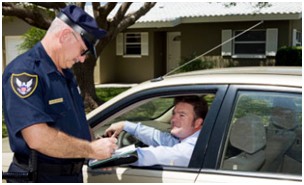
Five Steps to Safer Stops

By Richard Nance

Most patrol officers conduct traffic stops so frequently that it doesn't require much conscious thought. After recognizing a violation or suspicious circumstance to warrant an enforcement or investigative stop, the officer radios in the location and license plate number and activates the emergency lights. Once the violator vehicle has pulled over, the officer parks and exits the patrol vehicle to approach the driver. It is at this point, when it seems that the driver is compliant, that we tend to let our guard down-sometimes with tragic consequences.

Adherence to basic officer safety protocols is the key to maintaining the tactical advantage. Here are five of the most common tactical errors I see officers commit from the initial approach to the issuance of a citation.

1. Walking between the violator vehicle and your patrol vehicle.
On a busy roadway with a narrow shoulder, approaching from the passenger side is probably your safest bet. The tactical route to take is around the rear of your patrol vehicle. Of course cops are great at finding shortcuts and soon realize that it's easier just to walk in between the vehicles. Most officers will glance over their shoulder to make sure an approaching vehicle isn't going to slam into the back of the patrol vehicle as they're walking between the vehicles.

The problem with taking this shortcut is that it's not just approaching traffic that's a hazard. Remember the guy you just pulled over for having a taillight out? He thinks you know that he just robbed the convenience store in a nearby city. He is watching your approach from his rear view mirror and you're all that's standing between him and going back to prison. If he backs his vehicle suddenly, your options would be limited.

2. Standing in front of the door.
Whether you approach from the driver or passenger side, you should stop short of the door when contacting the occupants of the violator vehicle. The idea is for you to be able to see inside the vehicle without the occupant being able to see you. If the occupant were armed, he would have to turn his body in an unnatural manner to point the gun at you. Chances are, the violator will not be well versed in shooting over his shoulder from a seated position.

Even if the violator is unarmed, he could swing open the door and knock you back, into oncoming traffic.

I've seen officers rest their arms on the door of a violator's vehicle and practically place their head inside the vehicle to speak to the driver. Its easy to imagine what might happen if the driver accelerated suddenly.

3. Communicating with dispatch without using available cover
.Don't run driver license and warrant checks at the driver door! This is a dangerous practice that is bound to get you into trouble someday. Instead, walk back to your patrol vehicle and position yourself either behind the open passenger door or behind the patrol vehicle on the passenger side.

Standing behind the passenger door affords you a clear view of the violator vehicle but offers little cover. Also, since you are relatively close to the violator vehicle, you don't have much time to react to an occupant exiting and approaching you. This position also leaves you little cover in the event an occupant comes out shooting.

Standing behind your vehicle on the passenger side limits your view of he violator vehicle but it provides you better cover (since the engine block is between you and the violator vehicle). This location also places you further from the violator vehicle, which gives you more time to react to a threat.

4. Looking at the lapel mic instead of potential threats.
This is a very common tactical error. For some reason, officers using a lapel mic is tend to look at the mic when communicating with dispatch or other units. I've even seen officers turn their back from the violator vehicle to use their lapel mic. Obviously, taking your eyes off the violator vehicle leaves you vulnerable.

Using your lapel mic tactically takes practice, especially if you've been using it incorrectly for a long time.

5. Standing too close to a suspect holding your pen.
Occasionally, officers have the violator exit the vehicle to sign the citation. When this occurs, many officers stand dangerously close to the violator while the violator is holding the officer's pen and citation holder.

While I'm not suggesting that you make the suspect sign with a crayon, you have to realize that the pen and citation holder are formidable weapons that could be against you. To mitigate this problem, be sure to watch the suspect and step away once the suspect is "armed" with the pen and citation holder.

Setting the pen and citation holder on the trunk of your vehicle and having the suspect place it in the same spot after signing the citation will prevent you having to approach to within lunging distance of the violator to retrieve the items.

ConclusionTraffic stops are inherently dangerous. Don't allow yourself operate on "auto pilot." Instead, be vigilant and expect the unexpected. Doing so might give you the tactical edge needed to survive an unanticipated violent encounter.

 line-small.gif (227 bytes)

Learn Your Weak Skill, Then Fix It
Avoiding weak areas and enabling poor tactics will eventually show itself and imperil your mission.

By William Harvey

Reprinted from Police Magazine

One of the best personality-based questions to ask an officer hoping to promote to the next rank is, "What is your greatest weakness as a law enforcement officer?" The follow-up question is, "What are you doing to address this?"

At promotional tests, this question is asked to see if you have the ability to know your weakness and the courage to admit to it. After this, what are you doing to prevent this from harming your performance? Some of the quick-witted ones will say that they are a bad speller but they bought a new dictionary. Very funny. What is your greatest weakness in evaluating your knowledge, skills, and abilities?

I'm not talking about when your commander walks in with your yearly evaluation. Nor am I talking about promotion tests. I'm talking about the next radio call, where you must handle a certain type of call. At that moment, you have that feeling in your stomach, a "please not this call today" moment. You may call back in and ask, "Is this call really for me?" What is that call? What is your kryptonite? What is that skill you know you lack?

When I was a director of training, I would write what I called a "training prescription" for a student or officer sent to me. For whatever reason, I was the one to help them with their faults, weaknesses, and failures to produce. Not an easy task, but it can be done under only one condition. The person themselves must admit to themself that this is a problem and they must do something to address it.

If you don't perceive the problem to yourself, then it's not your problem. It is somebody else's. You hear "this is what they say" or "it's their idea." For those who are treated with weakness, faults or phobias, the patient must admit to themself that they have a problem. It's not anybody else's problem but theirs. Once you admit it, you can be on the road to recovery.

One of the biggest issues here is that we have cop buddies, and we become enablers. If I know you don't like a certain type of call, I will come handle your call. Even as cover officer, I'll take your call. This is what cop buddies do. We cover for each other. This can be good, but also fatal. If you enable another cop to get away with marginal technical or tactical skills and he or she is your partner/cover, you're compromising the mission.

Maybe a little tough cop love is in order. For instance, one case there was one officer who didn't like building searches. It's what we do on alarms and open doors; we look for the burglar. He always sat out back on the perimeter or watching the back door. Sooner or later, he will be on the point. The weakness that we allowed to grow is now a tactical nightmare.

I don't know your weakness. Do some introspection of yourself and your performance. Be true to yourself. Talk with your trusted partners, get their input. Seek out training help. Your academy staff, senior Field Training Officers (FTOs) or trusted officers can give you the leg up you need. I live by one theory—the thing that you fear the most is always lurking around the corner. Train smart, train hard and turn your weakness to strength.

    line-small.gif (227 bytes)

Lessons Shared: Police Chiefs Who Have Made the Transition to Emergency Management  

By Leischen Stelter

The roles and responsibilities of law enforcement are constantly shifting. During the last year, I heard from numerous police officials tasked with emergency management responsibilities, sometimes in addition to their normal duties. This happens because either there’s no one else to do it (or rather no money to pay someone to do it), or they find it’s a natural transition since their role as chief has already connected them with many city officials.

In this article, hear from a 27-year law enforcement veteran who is now the Director of Emergency Management for Salt Lake City, Utah who referred to his transition to emergency management as: “Baptism by fire.” While he admits there was a steep learning curve, he also offers some great advice for those who may be considering (or being forced) to make the shift to emergency management responsibilities:

  • Accept the fact that you will never be an expert in every discipline, so come into it knowing you have a lot to learn.

  • Build strong relationships, and do not expect others to come to you, you must seek them out and make yourself available.

  • Know your job is never done. This can be especially difficult for those coming from law enforcement—you can never close the case.

  • Learn to accept incremental gains.

Read more advice from him and other law enforcement officials about emergency management and why officers at all levels must increase their interest and involvement in emergency management responsibilities.

more >


line-small.gif (227 bytes)

The Bait Question in the Age of Computer Technology

By John Reid & Associates

The bait question is one of the oldest behavior provoking questions. It is a specialized question designed to introduce the possibility of incriminating evidence during an interview in an effort to entice the suspect to change an earlier response. Consider that a young girl was abducted and forced into a vehicle. After several hours the abductor released her on a country road several miles from town. The investigation leads to a suspect who is presently on probation for a similar abduction. Furthermore, the suspect's vehicle fits the general description of the vehicle described by the victim. During the course of the suspect's interview the investigator may ask the following bait question:

I: "Joe, we are in the process of dusting the inside of your car for fingerprints. Certainly we will find your prints as well as fingerprints from friends or relatives who have been in your car recently. Is there any reason we will find that young girl's fingerprints in your car? (Pause) I'm not saying that you abducted her or forced her in any way. Perhaps she asked you for a ride and, being a nice guy, you gave her a ride somewhere. That would explain why we would find her fingerprints inside your car."

J: "You know, she does look a little familiar but I don't remember giving her a ride." (Suspect sits back in the chair, dust's lint from his shirtsleeve and crosses his legs.)

Earlier during the interview the suspect was adamant that the victim was never in his vehicle. However, now that the investigator has introduced possible evidence that would contradict his earlier denial, his response indicates that he lacks confidence and is fearful. This is typical of the guilty suspect. Some guilty suspects will change their earlier position as a result of the bait question, e.g., "Now that you mention it, I did give her a ride in my car." Most, however, will offer a qualified denial or otherwise exhibit behavior symptoms indicating lack of confidence or uncertainty.

The innocent suspect, of course, is not at all worried about the evidence implicating him in a crime he did not commit. When the innocent suspect is asked a bait question he is likely to offer an emphatic and confident denial, e.g., "No you won't. She was never in my car!"

As this example illustrates there are four important parts to a bait question:

Commit the suspect to a denial within the area of the bait, i.e., that the victim was never inside the suspect's car.

The bait evidence has to be credible to the suspect. Through television and other media exposure all suspects are familiar with fingerprint evidence.

The evidence should be presented as a hypothetical question, e.g., "Is there any reason why...?" During an interview the investigator does not want to lie to the suspect and say, "We found her fingerprints inside your car."

If possible, the investigator should offer the suspect an innocent explanation for the evidence such as giving the victim a ride in the car. This is referred to as a "face-saver.

Computer and internet technology introduces many possible sources of evidence to use in a bait question. Thanks to television shows like CSI or NCIS, which frequently utilize computer evidence, the average suspect readily accepts the credibility of such evidence. The information provided by Edward Snowden alleging widespread abuse of internet surveillance by the NSA further establishes the credibility of this evidence in the suspect's mind. The following are examples of possible bait questions centered around computer technology 

Cell phone “If we were to review the internal record of cell phone calls you (made or received) last Friday, is there any reason those records would show that you (called victim on the night of her death)? Maybe someone else called (victim) using your cell phone. 

"Your cell phone carrier tracks which cell tower processed your call. If we were to review their records from last Saturday night, is there any reason they would show you using a tower in (the area of the crime)? Perhaps you were in the area even though you had nothing to do with committing this crime.

"Your cell phone records reflect not only who you called, but also the date and time of the call. Is there any reason those records would reflect a call to (person) at around 8:00 pm last Saturday night? Maybe he was on speed dial and you called him accidentally and immediately hung up.

"Most cell phones have an internal GPS which helps find the nearest cell tower. It also reveals the location of the cell phone. If we were to check your cell phone records for last Friday night is there any reason it would show that you were near the liquor store that was robbed? Perhaps you loaned your cell phone to someone who was in the area of the liquor store 

"When something like this happens people always pull out their cell phones and take photos or videos. We are in the process of reviewing some that have been submitted by people trying to help the investigation. We use face recognition software that can quickly scan faces to look for a match. Is there any reason we would see you in the crowd near where this bomb exploded? Just because you were there doesn't mean you had anything to do with this incident.

Laptop, PC

"A person's emails are stored permanently in a computer server. So even though an email is deleted, it can still be recovered from the server. When we check that server is there any reason it will show that you have sent or received emails from (victim)? Perhaps it was an error or you mis-clicked on a stored email.

"Even though a person clears their search history, it is still possible, through the search engine provider, to recover that information. Is there any reason those records would show that you have (searched or downloaded) information about (poisons, bomb making, etc.)? Perhaps you were doing research for a paper or heard something in the news and wanted to learn more about it.

"Just as everyone has unique handwriting that can be matched to a particular person, there are also unique aspects of key-stroking. These can be reconstructed and statistically analyzed to authenticate who entered information on a keyboard. If we were to have the password analyzed in this fashion, is there any reason those results would show that you were the person who entered the password? Maybe you entered the password, stepped away from your desk, and someone else actually sent the email.

"When you log on to the internet there is a record that your computer used a particular server located in a particular geographic area. If we were to check the locations of servers your computer used last Saturday, is there any reason those records would indicate your computer was in the (Maryland) area? Perhaps someone else used your computer to log on to the internet in Maryland.


Video Surveillance

"There are thousands of closed-circuit video surveillance cameras located in public places and private businesses in this city. We are in the process of reviewing a video located in the parking lot behind the apartment where this happened. Is there any reason it would show you entering that apartment complex last Saturday night? Maybe you went there to visit someone else or to ask directions.

 "I'm sure you've seen cameras on stop lights at intersections. They are there to identify vehicles that run a red light. The videos are digital and low light so we can zoom in on a license plate, even at night, to identify the owner of the vehicle. We are looking at the red light video last Friday night of the intersection of Sunset and West Ave. Is there any reason we would identify your vehicle going through that intersection around 9:00 or so? I'm not saying you had anything to do with this robbery, maybe you were driving through that intersection for a completely different reason.

"I'm sure you're aware of the NSA, right? They have these surveillance satellites miles above the earth that can show small print in newspapers. The satellites are primarily used for military purposes but, because the NSA is funded through our tax dollars, they also use the satellites for domestic purposes such as tracking forest fires, flooding and bad traffic accidents. There was a pretty bad accident last Friday at 3:00 pm on I-94 and we are getting the satellite images from the accident area. You told me earlier that you were staying at a Holiday Inn right off of 94 and that you were in your room at 3:00 pm that afternoon. From that video we will be able to see the cars in the Holiday Inn parking lot. Is there any reason we would not find your car in the lot? Maybe you left the hotel for a short period of time to pick up a late lunch or get a coffee."


Database Records


 "All rental car agencies are computerized and there are databases that store rental information, including driver's license information and photographs. If we were to check those database files would any of them show that a car was rented from LAX airport last Saturday evening using your driver's license? Maybe someone rented the car using your driver's license.

"Especially since 9/11, airline companies keep careful flight records of who books a flight, passenger information, frequent flier numbers and all sorts of other information. If we were to check airline records, would we find that you have scheduled a flight out of the United States in the near future? Perhaps you have been planning a vacation to some foreign country for a long time.

"Even independent Ma and Pa hotels use computers when they make reservations. Those computers leave an electronic record that can be traced. If we were to check hotel records in the Las Vegas area for the night of March 15th 2013, would any of them indicate that you stayed there that night? Perhaps you were in Las Vegas gambling or seeing a show last March and had nothing to do with (crime).


"With a person's social security number and other basic information, it is very easy to access financial information. If we were to check your financial records, is there any reason we would find that you made large (withdrawals, deposits) around this time? Perhaps someone owed you a large sum of money and finally paid you back.

"All credit card companies are under Federal regulation and must maintain certain records. With the right background information we can pull up anyone's credit card information - what their current balance is, what purchases they made, when and where they made those purchases. If we were to look over your credit card information is there any reason it would show that you made purchases in the Madison area last July 18th? I'm not suggesting that you were involved in this crime. Maybe you were in Madison for some other reason entirely.

A guilty suspect will not exhibit symptoms of uncertainty and anxiety when responding to a bait question unless the suspect is truly concerned that the evidence may implicate them in the crime he committed. Even the least educated criminal suspect understands how computerized our society is. This fundamental knowledge (accurate or not) suggests a number of possible credible bait questions centered involving computer technology. As illustrated, when asking a bait question the investigator should spend time developing the credibility that the evidence could exist and offer an innocent face-saving excuse for the evidence. Only about 20% of guilty suspects change their earlier position when responding to the bait question - the investigator should not expect the guilty suspect to make an admission. Rather, the bait question is asked to identify behavior symptoms of guilt or innocence.


Credit and Permission Statement: This Investigator Tip was developed by John E. Reid and Associates Inc. Permission is hereby granted to those who wish to share or copy the article. For additional 'tips' visit www.reid.com; select 'Educational Information' and 'Investigator Tip'. Inquiries regarding Investigator Tips should be directed to Janet Finnerty johnreid@htc.net. For more information regarding Reid seminars and training products, contact John E. Reid and Associates, Inc. at 800-255-5747 or www.reid.com.


 < < jump to the policetraining.net home page>