|

|
|

August
2015
Important: To ensure future delivery of
the Policetraining.net newsletter to your inbox (not bulk or junk folders)
please add our "From" address
info@policetraining.net to your address book or e-mail whitelist.
|

Making The Most of Your Daily Patrol Duties
|
 Street Crimes Street Crimes
with Pat McCarthy
I’ve always felt that there was nothing more impressive than
a squared-away patrol officer.
There are many misconceptions that thrive within the law
enforcement community but one of the most common I’ve
observed is the belief that patrol officers are limited to
certain tasks due to the fact that they are assigned to
patrol. Uniformed patrol officers have many more
opportunities to do good police work than they sometimes
realize. They really are the first responders to most crime
scenes, not the investigators or detectives who will do most
of the follow-up investigations on serious crimes.
Street cops are out there performing patrol duties every
shift they work, so here’s my message to the officers on
patrol: Take advantage of the opportunities you have to talk
to the people in your area of responsibility and learn to
develop the right approaches to develop good street
information.
All detectives and investigators started out in uniformed
patrol. Just because they are now investigators doesn’t make
their jobs more important than yours. In many situations,
you have the advantage over the investigators because you
will often have a better understanding of the crime problems
that are occurring in your patrol area. You should have a
good handle on where the bad guys usually congregate in your
patrol area.
If you’re doing your job right you should also have better
street contacts to reach out to for information and
intelligence. Take advantage of the contacts that you make
every shift that you work. Almost all criminals use vehicles
to get around. Whether it’s a dope dealer, a burglar, auto
thief, or gang-banger, they usually get around by driving or
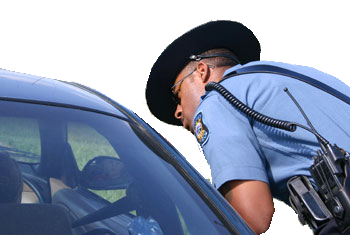
riding in a car. Patrol officers are making traffic stops
every shift they work. Take advantage of the opportunities
that are out there. I really believe there is no such thing
as a routine traffic stop. Take advantage of the power of
discretion that is afforded you in your daily patrol duties.
You make the call whether to issue a ticket, a warning
citation or a verbal warning during any stop you make. Look
beyond the traffic stop and try to develop information on
other crimes that are occurring in your area of
responsibility.
There is a misconception by some law enforcement
professionals that traffic stops don’t constitute real
police work. This mindset could not be further from the
truth. Over the years, thousands of patrol officers have
made outstanding felony arrests from what started out as a
routine traffic stop.
Many traffic stops have led to major cases and arrests
because the patrol officer was looking for something more
than issuing a traffic ticket. Don’t get me wrong, traffic
patrol is an extremely important function of law
enforcement, but it can (and often does) result in solving
some pretty serious crimes that have taken place. It’s a
well known fact that more arrests are made from traffic
stops than any type of undercover operation.
A prime example of the importance of traffic violation stops
is the arrest of Timothy McVeigh, the Oklahoma City bomber
who used a truck bomb to blow up the Alfred P. Murrah
federal building in Oklahoma City. This bombing killed 168
people and wounded more than 500 others. A traffic stop by
Oklahoma State trooper Charlie Hanger on McVeigh’s vehicle
for no license plate led to the arrest and eventual
execution of this madman.
I know that when working patrol, you are sometimes limited
in what you can accomplish on the street. I also know that
opportunities do exist that should be taken advantage of by
patrol officers. When I worked in patrol as a young cop in
Chicago, I was often assigned to shooting incidents where it
was my responsibility to protect the crime scene and provide
traffic control. That was part of my patrol duties, but
after the scene was processed and the detectives left the
area, I became proactive in my efforts to help solve the
case. I had people in the neighborhood who I interacted with
on a regular basis. I would talk to them and try to develop
information on the case — many times this led to information
that helped solve the crime.
As a young patrol officer I learned the value of having
business cards to pass out to people in my area of
responsibility. I got tired of writing down my contact
information on the back of a match book cover. If you stay
connected with the people in your patrol area, both the
criminal element and the legit people, you will be able to
develop good information to help solve the crimes that are
occurring in your area of responsibility.
I know from personal experience that taking that extra step
to do good police work pays off. One of my proudest
accomplishments in my career as a police officer is the fact
that I was meritoriously promoted to Gang Detective. The
Chicago Police Department has approximately 13,500 officers,
which makes it the second largest police department in the
U.S. Every time the department gave a detectives test,
thousands of patrol officers would apply and take the test —
the competition was intense.
If it we’re up to my testing skills I would probably have
never been promoted, but because I worked hard and did work
beyond my patrol duties, I was recommended for, and promoted
to the rank of Gang Detective. I know that if I could get
noticed and meritoriously promoted, you can too.
Always be proactive and professional. It will help you stand
out from the rest of the officers in your agency.
Stay safe and enjoy the job!
About the author
Pat McCarthy served 25 years with the Chicago PD. During his
career, Pat worked Patrol, SWAT, spent five years undercover
in the gang unit, and spent 11 years on three separate
federal task forces with the FBI. Pat also created the three
day Street Crimes training seminar in 1994.
The unique Street Crimes seminar provides top quality
training in over 150 cities a year, covering critical law
enforcement topics such as Patrol, Gang Crimes, Undercover
work, S.W.A.T. Team and Federal Task Forces. Check out the
schedule of upcoming Street Crimes seminars.
i
|
|
Fitness Tip from

Being fast and nimble may be the difference in survival. Using
exercises like the ones in
this video and the Cooper Law & Fire Group
Training course can help keep workouts fresh and exciting while
increasing upper body strength, agility, and quickness. To perform .
. .
Interviewing Witnesses
By John Reid &
Associates
(Please Note: If you wish to print and share an Investigator Tip
with your colleagues, the John E. Reid 'credit and permission'
statement following the article must be included.)
A witness is anyone who possesses
direct information pertinent to an investigation. Sometimes
witnesses are forthcoming and fully cooperative, other times they
are reluctant to get involved and occasionally they are deceitful in
an effort to protect themselves, an accomplice or loved one. There
are many factors that may influence the accuracy of a witness'
statement including trauma, passage of time, prejudices, influences
of drugs or alcohol, age, and psychological/ physiological
disorders. Finally, witnesses are interviewed in a number of
different settings, ranging from a totally uncontrolled setting
(outside a bank that was just robbed) to a semi-controlled
environment (the witness' home or office) or in a controlled setting
(the investigator's office).
With all these variables, obviously
there is no single best technique to develop information from a
witness. Consequently, this web tip will present a number of
different concepts relating to witness interviews which the
investigator will need to appropriately apply. There is, however, a
single underlying principle: the more time the investigator spends
talking to the witness, the more information will be learned.
Regardless of how cooperative a witness may be, the investigator
should never accept a witness's first version of an event as final
and complete. A witness rarely initially volunteers all the
information he or she possesses; the investigator must draw it out
by asking follow-up questions and perhaps even consider using
memory-enhancing techniques.
1.
Identifying a good witness. Consider that
a pedestrian was struck by a car when crossing the street. By the
time the police officer arrives on the scene, ten individuals have
congregated around the accident. The officer may be tempted to
approach a person in the crowd and ask, "Did you see what happened?"
This direct approach to locate a witness is likely to produce a
response such as, "I can't help you. I just got here."
The officer would be much more productive in identifying a
knowledgeable witness by initially asking an individual in the
crowd, "Do you know who may have seen this happen?" This question is
likely to produce a response such as, "That woman over there was
here when I arrived and by the way she's acting it looks like she
saw the whole thing." Armed with this insight, the officer could
approach the identified woman and state, "Ma'am, I understand that
you were here when this happened. Would you help me out by telling
me what you saw and heard?"
It may also be beneficial to observe the behavior of potential
witnesses in a crowd to identify a person who is likely to possess
information and be willing to share it. The individual may appear
animated in discussing the incident with those around them, appear
approachable by exhibiting an open posture and a friendly facial
expression. When the investigator attempts to make eye contact the
willing witness may turn toward the investigator and return mutual
gaze.
2.
Interview multiple witnesses separate from each other. Consider that three people witnessed the same fight in a bar. If
the investigator approaches them and asks, "What did you see?" one
witness is likely to do most of the talking while the other two nod
in agreement. Three individuals can witness the exact same event but
their recollections of the event may differ slightly. To account for
individual differences, it is important that the investigator
conduct three separate interviews. This technique is also useful to
identify possible biases or omissions within a particular witness'
statement.
3.
Create the most private environment possible for the interview. Almost every witness statement
attributes blame to someone or something for the observed event.
Psychologically, pointing a finger at a responsible person is
difficult for most individuals. This difficulty increases
substantially when a witness' statement incriminates a friend,
family member or accomplice. To ease the psychological burden of
implicating others, the investigator must afford the witness
privacy.
Once a witness is selected from a crowd it would be appropriate to
escort the witness 15 or 20 feet from the crowd before asking
questions about the occurrence. In some situations, it may be
appropriate to place the accused person in custody in the back seat
of a squad car and then privately question the witness out of the
accused person's presence. There may be instances where the witness'
statements will be so critical to the successful prosecution of the
guilty that the investigator may choose to interview the witness in
the confines of an interview room in a law enforcement center.
Regardless of the circumstance, the important message is that once a
witness is located the investigator should do whatever is possible
to afford the witness privacy before expecting that person to
provide accurate and meaningful information.
4.
Do not elicit personal information from the witness (full name,
address, telephone number) early during an interview. The reason many witnesses are reluctant to offer information is
the fear of getting involved in the legal system (testifying in
court, being named as a source of information to obtain an arrest
warrant, etc.) Consequently, once an investigator identifies that a
person may have information pertinent to an investigation, the
information should be elicited in a casual manor, e.g., "Good
evening sir. I'm a police officer investigating this incident. Can
you tell me what happened?" Only after the witness has provided the
desired information should the investigator elicit personal
information.
For much the same reason, the investigator should refrain from
taking written notes early during the interview. Not only does
note-taking remind the witness of the permanency of the statement,
but it can be a distraction and affect the natural flow of
information. Once the witness has made a complete oral statement the
investigator can pull out a pen and paper and document what was
said.
5.
Introduce each area of the interview with an open question. Research and empirical observations
clearly indicate that the most effective technique to develop full
and accurate information from a witness is to start with a broad
question, e.g. "Please describe the car for me" than to ask a series
of closed-ended questions, e.g. "What color was the car?"; "Was is a
van or sedan?" How old do you think the car was?"
When asking an open question the investigator should not influence
the witness' statement by making assumptions within the question.
Witnesses are often nervous when talking to an authority figure and
may be eager to please the investigator by saying what they think
the investigator wants to hear (or already knows). Consider that a
woman heard a loud noise coming from the liquor store across the
street and saw a person run out of the store following the sound. As
it turns out, the liquor store was just robbed and the clerk was
shot dead. It is improper to ask this witness "Describe the man who
robbed the liquor store" because the question assumes that the
robber was a man and that the person being described is the person
who robbed the liquor store. Rather, the investigator should ask
"Describe the person you saw leave the liquor store after you heard
the loud sound."
Once the witness starts to respond to the investigator's open
question, the investigator should not interrupt the account. Rather,
he should encourage the witness to fully respond to the question
with phrases such as "please continue," "I understand," or
"alright." Certainly, during the course of an open account
additional questions will occur to the investigator. However, if the
investigator interrupts the witness' response with a detail
question, e.g."How many shots did you hear?" the interview will
quickly deteriorate to an undesirable question and answer session.
6.
Ask clarifying questions before detail questions. As the name implies, clarifying questions are intended to draw out
further information about a topic mentioned within an open response.
Examples of clarifying questions include, "Tell me more about what
you heard prior to the fight;" "Describe the vehicle that struck the
woman"; or "Tell me again about what caused you to step out of your
house?"
Detail questions seek specific answers and should be reserved for
the conclusion of the interview. They fill in gaps of missing
information not volunteered by the witness through the use of open
or clarifying questions. Examples of detail questions are, "What
time did this happen?" "What color was the car?" "Did he strike him
with his left or right hand?" Because detail questions force the
witness to offer specific information, they are the most likely
questions to elicit false information. Failure to offer a definitive
response to a detail question holds a negative connotation - the
witness is stupid, the witness is uncooperative, the witness is
withholding information. Consequently, witnesses are prone to lie to
detail questions.
7.
Memory - enhancing techniques. It
is the investigator's goal to develop accurate and complete
information from a witness. The previously listed techniques are
designed to increase the accuracy of information. To increase the
amount of information a witness recalls, consider these tactics:
Traumatized witnesses should always be re-interviewed at a later
date. Especially when the witness is also a victim, it is
important to gain immediate information in an effort to quickly
identify a possible suspect and collect relevant evidence.
Frequently, however, a traumatized witness will be able to recall
further information 24 or 48 hours following the incident. After
taking the initial report, the investigator should prepare the
traumatized witness for a second interview with a statement such as
the following:
"Linda, I know this has been difficult for you and I really
appreciate your assistance. In cases like this, I have found that a
person will remember more about what happened if given some time to
think about it. I would like to talk to you again tomorrow afternoon
to update you on our investigation and to find out what else you
remember. Would that be alright?"
Have the witness write down their
recollections. Many individuals are kinesthetic
thinkers in that the act of writing will help stimulate and organize
memories. This should not be introduced as a "written statement" but
rather as a technique to assist the witness' recollection. For
example, the witness may be given a sheet of paper with the numbers
one through ten listed as a column and asked to write down, in
sequence, ten recollections about the event. Once this task is
completed, the investigator can ask the witness to try to add two
more recollections following each of the ten points.
Consider using cognitive interviewing techniques. These
specialized techniques are specifically designed to enhance a
person's recall. They require a cooperative witness and should be
utilized in a controlled environment. The witness should be relaxed
and comfortable. It may also be appropriate to ask the witness to
close their eyes to help concentrate.
The first technique involves recalling the incident in reverse
order. The witness would be asked to start their story with the last
recollection, and working toward the first recollection. The
investigator could also ask the witness to tell their story from a
different perspective. For example, in a hit and run accident, the
witness could be asked to tell the story from the victim's
perspective.
A second concept within cognitive interviewing involves asking
hypothetical questions about the recalled event. In the process of
answering these questions, further memories may be stimulated within
the witness. Examples of these questions include:
"Did he remind you of anyone you
know?"
"Why do you think he was dressed the
way he was?"
"What do you think the man did for a
living?"
"Where do you think he was from?"
"Did the man mention any names?"
Conclusion
Developing accurate and complete
information from witnesses is critical to any criminal
investigation. This information may determine whether or not a crime
was committed, the direction in which an investigation goes and the
identification of the perpetrator of a crime. Yet, too often,
investigators engage in procedures that fail to identify valuable
witnesses to a crime, or question witnesses with techniques that
result in missing or erroneous information. Of primary importance,
investigators need to create a private environment to interview
witnesses which will, in turn, allow for more structure within the
interview. Specifically, the investigator should start the interview
by asking open questions followed by clarifying questions. Only at
the conclusion of the interview should the investigator ask detail
questions, take written notes and obtain personal information about
the witness.
Credit and Permission Statement:
Permission is hereby granted to
those who wish to share or copy this article. In those instances,
the following Credit Statement must be included "This Investigator
Tip was developed by John E. Reid and Associates Inc. 800-255-5747 / www.reid.com."
Inquiries regarding Investigator Tips should be directed to Janet
Finnerty jfinnerty@reid.com.
8 Tactical Tips to Prevent an Ambush
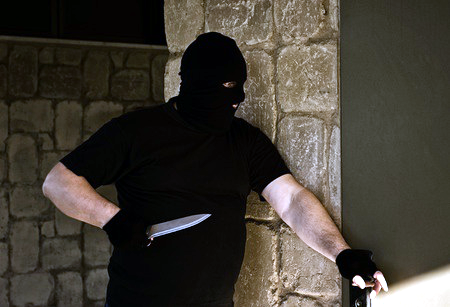 The following eight tactical tips can help ensure
your safety both on duty and off. The following eight tactical tips can help ensure
your safety both on duty and off.
The Officer
Down Memorial Page indicates that gunfire deaths against cops is up
56 percent in 2014. Two names recently listed on that site are
Wenjian Liu and Rafael Ramos — two NYPD cops working a detail in the
crime-riddled borough of Brooklyn who were executed in cold blood
while sitting in their police cruiser. The gunman posted on social
media that he was putting wings on two cops to revenge the deaths of
Brown and Garner — a bold display of lawlessness that reflects a
disturbing trend of violence against cops this year.
Men and women
in blue, take notice as this spike may continue into 2015. In fact,
this deadly trend may actually worsen if we don’t get control of the
problem.
The growing
racial divide instigated by public figures and political leaders
alike has ignited a fire storm against American Law Enforcement.
Going a Decade Back
Just days
before this heinous ambush, protestors marched in New York City
chanting “What do we want? Dead cops! When do we want it? Now!”
These alleged
leaders failed to condemn these types of violent demonstrations.
When criminals feel embolden they will be more likely to strike. It
was reported that witnesses to the double homicide of Wenjian Liu
and Rafael Ramos actually cheered and clapped after the murder at
the scene. This next chapter of law enforcement may be etched in the
history books as an era that set back police and citizen
relationships as seen in the 1970s and 1980s.
Ten years ago,
Officer Mark Sawyers — with whom I had the honor of working patrol
sectors — was sitting in his patrol car at a Target department store
in broad day light, completing a report when a gunman approached his
squad car and shot him in the head with a shotgun. Much like
Officers Wenjian Liu and Rafael Ramos, Mark was ambushed and never
had the opportunity to react to the threat and was murdered in cold
blood. A manhunt would last for months for the gunman until he was
ultimately featured on Americas Most Wanted and committed suicide as
the tactical team entered his location.
After Mark’s
murder, officers still had to work their patrol sectors to provide
police services to the community. But his murder was a game changer
for many officers, who changed their patrol tactics to ensure their
survival, as a cop killer was still on the loose.
The following
eight tactical tips can help ensure your safety both on duty and
off.
1. Heighten situational awareness: No matter what
you are doing or who you ‘re talking with, your situational
awareness needs to be highly acute so you can respond in a moment’s
notice. Don’t place yourself in a vulnerable spot, whether you’re
parked in your patrol car, speaking with a citizen or stopped at an
intersection. Watch the person you are speaking with, scan the area,
formulate a tactical response if attacked, recognize an escape
route, recognize ambush points and repeat this cycle. This should be
a loop cycled through your brain as you conduct everything you do
while on duty.
2. Don’t be a sitting target: While in your
cruiser, don’t sit in an open public area. If you have reports to
type on your cruiser computer or notes to add to a ticket or
accident report, seek a safer environment such as your police
station or precinct. If that’s not practical, meet a sector partner,
park in a secluded spot that is vast so you can see approaching
persons and do your follow up work as your partner keeps a watchful
eye.
3. Taking breaks: Don’t sit in donut shops, and
avoid eating in restaurants. Meet with other officers at the police
station or precinct to eat. Park in a position in the parking lot
that allows the best tactical advantage — preferably with another
patrol partner.
4. Tactical edge: As you speak with the public, no
matter how insignificant the call is, have a tactical response ready
to deploy. Keep a safe gap between you and the person you’re dealing
with. Position yourself in the best stance that will allow for a
quick response to a physical confrontation of a gun threat. Too many
officers stand nose to nose with the subject they are dealing with
and both their hands on their gun belt.
5. Read the public: While in uniform watch the
public, read their intentions and anticipate threats. This may sound
like paranoia but good cops do this all day long even while
off-duty. Don’t overreact to situations that may seem like a threat,
just be ready to react. This tactic may give you the split second
needed to respond to a threat instead of missing the verbal queues
and physical movements that telegraph a possible attack.
6. Don’t hesitate: Don’t allow the threat of being
accused of racism slow your response to a threat. If you’re
conducting yourself lawfully during the course of your duties, the
Brown and Garner cases prove that the system works. When met with
any threat, be quick to react in a lawful and appropriate manner.
7. Proper force: When a threat has presented
itself, apply the legal force allowed – however -- never try to meet
a deadly threat with non-lethal force. In other words don’t allow
the current climate to scare you into meeting a deadly threat with
an electronic control device or pepper spray. If your life is in
danger and there isn’t a way to neutralize the threat, don’t
hesitate to deploy lethal force when warranted. Deploying non-lethal
force options in a lethal force threat situation may get you killed.
8. Live another day: During the coming months,
attacks on law enforcement like that in NYC may occur in any town,
USA. Don’t be complacent and think it can’t happen to you. The fact
is, the majority of cops killed in the line of duty in America are
suburban or small town cops.
Conclusion
As 2014 we
roll into 2015, we need to strive to maintain our professionalism,
and demonstrate calm and rational law enforcement. Don’t be baited
into a confrontation because you’re ready for a quick tactical
response. Awareness on our part can help resolve this alarming trend
in law enforcement gun deaths.
Make a pledge
to keep yourself safe in honor of those men and women who sacrificed
their lives in 2014.
About the author
Glenn French,
a Sergeant with the Sterling Heights (Mich.) Police Department, has
22 years police experience and currently serves as the Team
Commander for the Special Response Team, and Sergeant of the
Sterling Heights Police Department Training Bureau. He has 14 years
SWAT experience and served as a Sniper Team Leader, REACT Team
Leader, and Explosive Breacher.
He is the
author of the award-winning book “Police Tactical Life Saver” which
has been named the 2012 Public Safety Writers Association Technical
Manual of the year. Glenn is also the President of
www.tacticallifesaver.org.
Glenn has
instructed basic and advanced SWAT / Tactical officer courses, basic
and advanced Sniper courses, Cold Weather / Winter Sniper Operations
and Active Shooter Response courses, Tactical Lifesaver Course and
others. Sgt French served in the U.S. Army. During his military
tenure Sgt French gained valuable experience in C.Q.B., infantry
tactics and explosive breaching operations.
Contact Glenn French.
|
|
